Introduction
Artificial Intelligence has evolved far beyond single chatbots and standalone models. Modern AI applications increasingly rely on Multi-Agent Systems (MAS), where multiple specialized AI agents collaborate to solve complex problems more efficiently than a single agent.
Think of a software company. Instead of one employee handling requirements, coding, testing, documentation, and deployment, different specialists work together. Multi-Agent Systems follow the same principle: divide responsibilities among specialized agents and coordinate their efforts.
What is a Multi-Agent System?
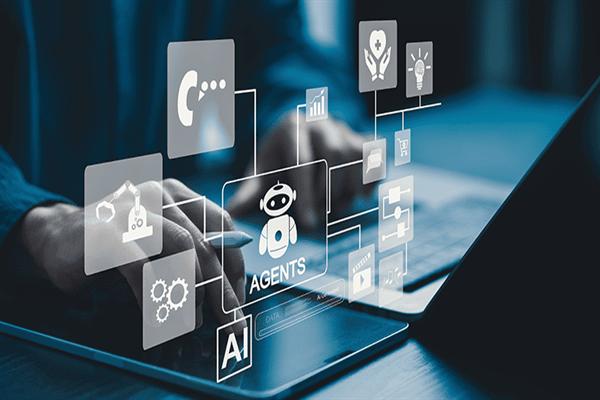
A Multi-Agent System is a collection of autonomous agents that communicate and collaborate to achieve a common objective.
Each agent has:
- A specific role
- Defined responsibilities
- Access to tools and data
- Decision-making capabilities
Example
For a content creation platform:
- Research Agent
- Collects information
- Writer Agent
- Creates content
- Editor Agent
- Reviews quality
- SEO Agent
- Optimizes keywords
- Publishing Agent
- Publishes content
Together they form an intelligent workflow.
Why Use Multi-Agent Systems?
1. Better Scalability
Tasks are distributed among agents, reducing bottlenecks.
2. Specialization
Each agent becomes highly optimized for a specific function.
3. Improved Accuracy
Agents validate each other's outputs.
4. Parallel Processing
Multiple tasks can execute simultaneously.
5. Flexibility
New agents can be added without redesigning the entire system.
Core Components of a Multi-Agent System
Agent Layer
Contains individual AI agents.
Examples:
- Planner Agent
- Research Agent
- Coding Agent
- Testing Agent
- Reviewer Agent
Communication Layer
Allows agents to exchange information.
Methods include:
- API calls
- Message queues
- Shared memory
- Event-driven architecture
Orchestration Layer
Coordinates workflows.
Responsibilities:
- Task allocation
- Dependency management
- Conflict resolution
Knowledge Layer
Stores shared information.
Examples:
- Vector databases
- Knowledge graphs
- SQL databases
- Document repositories
Multi-Agent Architecture
A typical architecture looks like:
User Request
↓
Coordinator Agent
↓
Research Agent → Data Collection
↓
Analysis Agent → Insights
↓
Writer Agent → Output Creation
↓
Reviewer Agent → Quality Validation
↓
Final Response
This structure creates a controlled and scalable workflow.
Step-by-Step Guide to Build a Multi-Agent System
Step 1: Define the Business Goal
Start with a clear objective.
Examples:
- Customer support automation
- Software development assistant
- Research automation
- Financial analysis system
Avoid creating agents without a specific purpose.
Step 2: Break the Workflow into Tasks
Example:
Building an AI Content Generator
Tasks:
- Research
- Outline Creation
- Content Writing
- SEO Optimization
- Review
- Publishing
Each task becomes a potential agent.
Step 3: Design Agent Roles
Example:
Research Agent
Responsibilities:
- Search information
- Extract facts
- Generate summaries
Writer Agent
Responsibilities:
- Draft content
- Structure sections
Reviewer Agent
Responsibilities:
- Fact checking
- Grammar validation
SEO Agent
Responsibilities:
- Keyword optimization
- Metadata generation
Step 4: Select the Technology Stack
LLM Providers
- OpenAI GPT
- Anthropic Claude
- Google Gemini
Agent Frameworks
- LangGraph
- CrewAI
- AutoGen
- Semantic Kernel
Storage
- PostgreSQL
- MongoDB
- Redis
Vector Database
- Pinecone
- Weaviate
- ChromaDB
Step 5: Create Individual Agents
Example structure:
Research Agent:
- Input:
- Topic
- Output:
- Research notes
Writer Agent:
- Input:
- Research notes
- Output:
- Blog draft
Reviewer Agent:
- Input:
- Blog draft
- Output:
- Approved content
Keep agents focused on one responsibility.
Step 6: Implement Communication
Agents must exchange information.
Example JSON message:
{
	"agent": "Research",
	"status": "Completed",
	"output": "Market analysis data"
}
Common communication patterns:
Sequential
Agent A → Agent B → Agent C
Parallel
Agent A
↙ ↘
Agent B Agent C
↘ ↙
Agent D
Hierarchical
Manager Agent
↓
Worker Agents
Step 7: Build the Coordinator Agent
The coordinator acts as the project manager.
Responsibilities:
- Route tasks
- Monitor progress
- Handle failures
- Aggregate results
Without orchestration, agents become difficult to manage.
Step 8: Add Memory
Agents should retain context.
- Short-Term Memory
- Current conversation state.
- Long-Term Memory
- Historical interactions.
Examples:
- Customer preferences
- Previous projects
- Organizational knowledge
Step 9: Add Tools
Agents become more powerful when connected to external tools.
Examples:
Research Agent
Tools:
- Web search
- APIs
Coding Agent
Tools:
- Git repositories
- Code execution
Data Agent
Tools:
- Databases
- Analytics platforms
Step 10: Implement Evaluation
Measure system quality.
Metrics:
- Accuracy
- Completion rate
- Response time
- Cost per task
- User satisfaction
Monitoring is essential for production systems.
Practical Example
Suppose we want to create an AI Software Development Team.
- Planner Agent
- Creates project roadmap.
- Architect Agent
- Designs system architecture.
- Developer Agent
- Writes code.
- Tester Agent
- Generates and executes tests.
- Reviewer Agent
- Checks quality and security.
Workflow:
User Requirement
↓
Planner
↓
Architect
↓
Developer
↓
Tester
↓
Reviewer
↓
Final Delivery
This mirrors how real engineering teams operate.
Common Challenges
Agent Hallucination
Agents may generate incorrect information.
Solution:
- Validation agents
- Retrieval-Augmented Generation (RAG)
Infinite Loops
Agents repeatedly communicate.
Solution:
- Maximum iteration limits
High Cost
Multiple agents increase token usage.
Solution:
- Use lightweight models where possible
Coordination Complexity
More agents create management overhead.
Solution:
- Clear responsibilities
- Structured workflows
Best Practices
- Start with 2–3 agents.
- Keep agent roles narrow.
- Use a coordinator agent.
- Implement memory carefully.
- Log every interaction.
- Add monitoring and evaluation.
- Validate outputs before user delivery.
- Avoid unnecessary agent creation.
Future of Multi-Agent Systems
Multi-Agent Systems are rapidly becoming the foundation of enterprise AI. As models improve, organizations will deploy networks of specialized agents capable of handling software development, research, operations, customer support, and decision-making workflows with minimal human intervention.
The future is not a single super-intelligent AI but coordinated teams of intelligent agents working together toward shared goals.
Conclusion
Multi-Agent Systems represent the next stage of AI evolution. By dividing responsibilities among specialized agents, organizations can build scalable, accurate, and efficient AI solutions.
The implementation process is straightforward:
- Define the goal
- Break work into tasks
- Create specialized agents
- Enable communication
- Add orchestration
- Connect tools and memory
- Monitor and evaluate performance
When designed correctly, Multi-Agent Systems can automate complex workflows and deliver results that would be difficult for a single AI agent to achieve alone.
