3
What is the difference between stack and heap in MVC?
What is the difference between stack and heap in MVC?
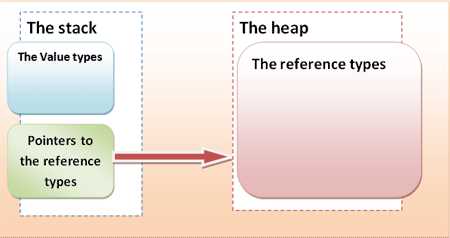
In an ASP.NET MVC application, the concepts of Stack and Heap are part of the .NET runtime memory model. They are not specific to MVC, but every MVC application uses them when executing code.
| Stack | Heap |
|---|---|
| Stores local variables and method call information. | Stores objects and reference type instances. |
| Memory allocation and deallocation are automatic and very fast. | Memory allocation is slower, and deallocation is handled by the .NET Garbage Collector (GC). |
| Each thread has its own stack. | Shared among all threads in the process. |
| Uses LIFO (Last In, First Out) structure. | Does not follow LIFO. |
| Size is limited. | Much larger than the stack. |
Value types (e.g., int, double, bool,
struct) are generally stored here when declared as local variables. |
Reference types (e.g., classes, arrays, strings, objects) are stored here. |
| Variables exist only until the method returns. | Objects remain until no references exist and the Garbage Collector reclaims the memory. |
public class Employee
{
    public string Name { get; set; }
}

public void Demo()
{
    // Value type stored on the stack
    int age = 25;

    // Reference variable on the stack
    // Employee object on the heap
    Employee emp = new Employee();

    // String object stored on the heap
    emp.Name = "John";
}
Stack                          Heap
------------------            ------------------------
age = 25                      Employee Object
emp ---------- -------------> Name = "John"
age is a value type, so its value is stored on the stack.emp is a reference variable stored on the stack, but it points to an
Employee object stored on the heap.Name string is also stored on the heap.When a request reaches an MVC application:
For example:
public ActionResult Details()
{
    int id = 10;                     // Stack

    Employee emp = new Employee();   // Reference on stack, object on heap
    emp.Name = "Alice";              // String on heap

    return View(emp);
}
MVC itself does not introduce a separate stack or heap; it relies on the standard .NET memory management model.

Difference between stack and heap in MVC