0

International organizations rarely end a conflict by themselves. Their influence is usually indirect: they create channels for negotiation, help limit harm to civilians, and make it harder for parties to ignore agreed rules. How much they can achieve depends on whether the governments and armed groups involved are willing to cooperate—and whether powerful member states back the effort.
The United Nations can bring opposing parties into talks, appoint envoys, support peace agreements, and authorize peacekeeping operations. Its agencies also coordinate relief and negotiate humanitarian access negotiations so food, medicine, and other aid can reach people caught in fighting. Where a mandate and security conditions allow, peacekeepers may protect civilians or support a ceasefire, but they are not a substitute for a political settlement.
Regional bodies such as the African Union, the European Union, and the Organization of American States can sometimes offer mediation that is closer to the conflict and more acceptable to local parties. They may also provide observers, peace support, or regional mediation efforts alongside the UN. In some cases, states and international organizations use targeted sanctions to pressure leaders or restrict resources linked to violence; those measures can also have unintended effects and are not a quick fix.
International organizations have no single authority that can compel every side to comply. The UN Security Council can be blocked by divisions among its permanent members, while mediators cannot make parties honor a deal if they see continued fighting as more advantageous. Monitoring can help verify commitments, and ceasefire monitoring missions may document violations, but observers need access and a workable mandate.
Accountability mechanisms can preserve evidence and support investigations into alleged abuses, though legal processes take time and do not stop violence on their own. In practice, organizations are most effective when diplomacy, humanitarian work, regional involvement, and international accountability mechanisms reinforce one another—and when the parties themselves see a reason to negotiate.

International organizations serve as key parties in management of conflict due to their relevance in diplomacy, international negotiations and support of peace processes. Nowadays, conflicts increase worldwide and to regulate this violence, there are international organizations, such as the United Nations, NATO, European Union whose main tasks are to prevent the violence, to negotiate, and maintain peace as well as law and order as required in the troubled zones.
Negotiation is one of the main approaches to conflict management, with the institutions assuming a mediator’s role. The United Nations, more specifically through its Security Council and peacekeeping, gets the rival factions together for negotiations. Both the European union and the African union as members of the international community have also responsibilities of dialogues to prevent the degeneration and to ensure diplomacy is c implemented well.
Humanitarian assistance is another important function that is also mostly performed in cooperation with other agencies such as the United Nations. People can be directly or indirectly involved in war and they require food, shelter along with medical assistance and it is supplied by international organizations. Like the Red Cross and UNHCR, it operates in the war zones for assisting people in transit. This support relieves the suffering, restricts the conflicts that arise due to food shortage and rupture of humanitarian aid.
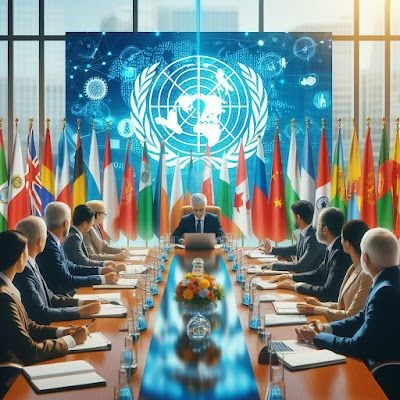
Sanctions and peace agreements are also carried by international organizations as well. The United Nations and NATO use sanctions and send peacekeepers to make sure respective countries adhere to treaty agreements. They discourage additional aggressiveness, punish the offenders, and maintain lasting order because both parties adhere to the terms of the agreement instead of fighting again.
Human resource development for capacity enhancement as well as reconstruction of the conflict-affected regions play a significant role in the maintenance of peace. They contribute to reconstruction of institutions, providing recovery of the economy, as well as preparing security forces. The donors particularly the World Bank and some UN agencies develop governance reforms and infrastructures so that these countries do not relapse to conflict. Such enable the construction of sustainable peace as opposed to mere signing of peace accord that does not produce lasting stability and development.
Conclusion
International organizations play vital roles in addressing conflicts through diplomatic measures for conflict resolution, provision of humanitarian assistance, laying down sanctions and post-conflict reconstruction. They lessen the chances of its aggravation, shield the populace and sustain the peace. Despite the conflicts, they play a significant role in preservation of world peace and security. Thus, it is also important to strengthen its authority and cooperation for the purpose of handling the conflict in the future and maintaining the International order.
