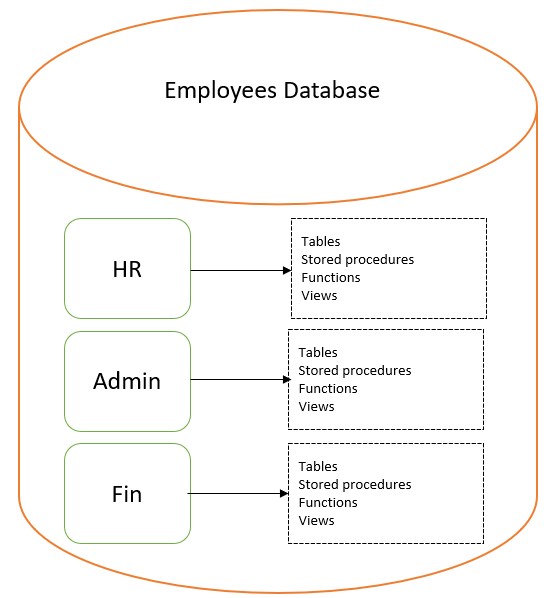
A SQL Schema is a logical container that organizes database objects like tables, views, stored procedures, and functions. It helps you structure, manage, and secure your database efficiently.

What is a Schema?
- A schema acts like a namespace inside a database.
- Instead of putting everything in one place, schemas allow you to group related objects.
Example:
SELECT * FROM dbo.Users;
SELECT * FROM sales.Orders;
Here:
dboandsalesare schemasUsers,Ordersare tables
Why Use Schemas?
1. Better Organization
Group related objects:
sales→ Orders, Customershr→ Employees, Payroll
2. Security Control
You can give permissions at schema level:
GRANT SELECT ON SCHEMA::sales TO User1;3. Avoid Name Conflicts
You can have same table name in different schemas:
sales.Users
hr.Users
Default Schema
- Default schema in SQL Server is
dbo - If no schema is specified, SQL uses
dboautomatically
Create a Schema
CREATE SCHEMA sales;Create Table in Schema
CREATE TABLE sales.Orders (
    Id INT PRIMARY KEY,
    Amount DECIMAL(10,2)
);
Transfer Object to Another Schema
ALTER SCHEMA sales
TRANSFER dbo.Orders;
Drop Schema
DROP SCHEMA sales;Note: Schema must be empty before dropping
Schema vs Database
| Feature | Schema | Database |
|---|---|---|
| Level | Inside database | Top-level container |
| Purpose | Organization | Storage |
| Example | sales, hr | CompanyDB |
Real-World Example
In a production app:
auth→ Users, Rolesblog→ Posts, Commentsbilling→ Invoices, Payments
This structure makes your system:
- Clean
- Scalable
- Easy to manage
Best Practices
- Use meaningful schema names (
sales,admin,reporting) - Avoid putting everything in
dbo - Apply permissions at schema level
- Use schemas for modular architecture
Common Mistakes
- Ignoring schemas → messy database
- Mixing unrelated tables in one schema
- Not using schema-based security
Final Thoughts
SQL Schema is a powerful but often ignored feature. Proper use of schemas leads to:
- Better organization
- Strong security
- Cleaner architecture
