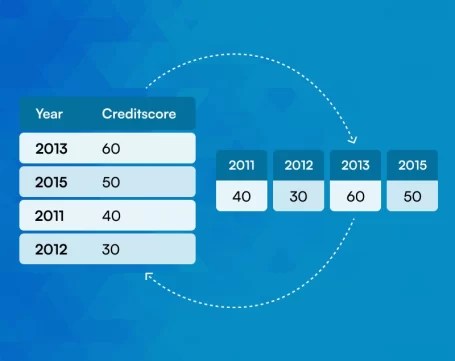
In SQL, the PIVOT operation is used to convert row data into columns. It’s extremely useful when you want to generate reports, summaries, or dashboards from normalized data.
What is PIVOT?
PIVOT rotates data from rows into columns, allowing you to aggregate values and display them in a more readable format.
- Think of it like creating a summary table where:
- Rows become columns
- Values are aggregated (SUM, COUNT, etc.)
When to Use PIVOT
- Creating reports (monthly sales, yearly stats)
- Converting category rows into columns
- Dashboard data representation
- Data summarization
Sample Table
Sales Table:
| Employee | Month | Sales |
|---|---|---|
| John | Jan | 100 |
| John | Feb | 150 |
| Mike | Jan | 200 |
| Mike | Feb | 250 |
Without PIVOT (Normal Query)
SELECT Employee, Month, Sales
FROM Sales;
Output remains row-based.
Using PIVOT
SELECT *
FROM (
    SELECT Employee, Month, Sales
    FROM Sales
) AS SourceTable
PIVOT (
    SUM(Sales)
    FOR Month IN ([Jan], [Feb])
) AS PivotTable;
Output
| Employee | Jan | Feb |
|---|---|---|
| John | 100 | 150 |
| Mike | 200 | 250 |
Syntax Breakdown
PIVOT (
    AGGREGATE_FUNCTION(ColumnToAggregate)
    FOR ColumnToPivot IN ([Value1], [Value2], ...)
)
AGGREGATE_FUNCTION → SUM, COUNT, AVG, etc.
- ColumnToAggregate → numeric column (e.g., Sales)
- ColumnToPivot → column whose values become new columns (e.g., Month)
- IN → list of values to convert into columns
Key Points
- PIVOT requires an aggregate function
- You must specify column values manually in
IN - Works mainly in SQL Server (syntax may differ in other DBs)
Dynamic PIVOT (Advanced)
If you don’t know column names in advance (e.g., months), use dynamic SQL:
DECLARE @cols NVARCHAR(MAX), @query NVARCHAR(MAX);

SELECT @cols = STRING_AGG(QUOTENAME(Month), ',')
FROM (SELECT DISTINCT Month FROM Sales) AS M;

SET @query = '
SELECT *
FROM (
    SELECT Employee, Month, Sales FROM Sales
) AS Source
PIVOT (
    SUM(Sales) FOR Month IN (' + @cols + ')
) AS P;';

EXEC sp_executesql @query;
PIVOT vs GROUP BY
| Feature | PIVOT | GROUP BY |
|---|---|---|
| Output | Columns | Rows |
| Use Case | Reports | Aggregation |
| Flexibility | Less flexible | More flexible |
Conclusion
SQL PIVOT is a powerful tool for transforming and summarizing data into a report-friendly format. While it requires a bit of setup, it can significantly simplify complex reporting queries.
