In today’s software ecosystem, APIs (Application Programming Interfaces) are the backbone of communication between systems. Whether you're building web apps, mobile apps, or microservices, understanding the API Life Cycle is essential for creating scalable, secure, and maintainable systems.
What is an API Life Cycle?
The API Life Cycle refers to the end-to-end process of designing, developing, deploying, managing, and eventually retiring an API.
It ensures that APIs are:
- Well-structured
- Secure
- Scalable
- Easy to maintain
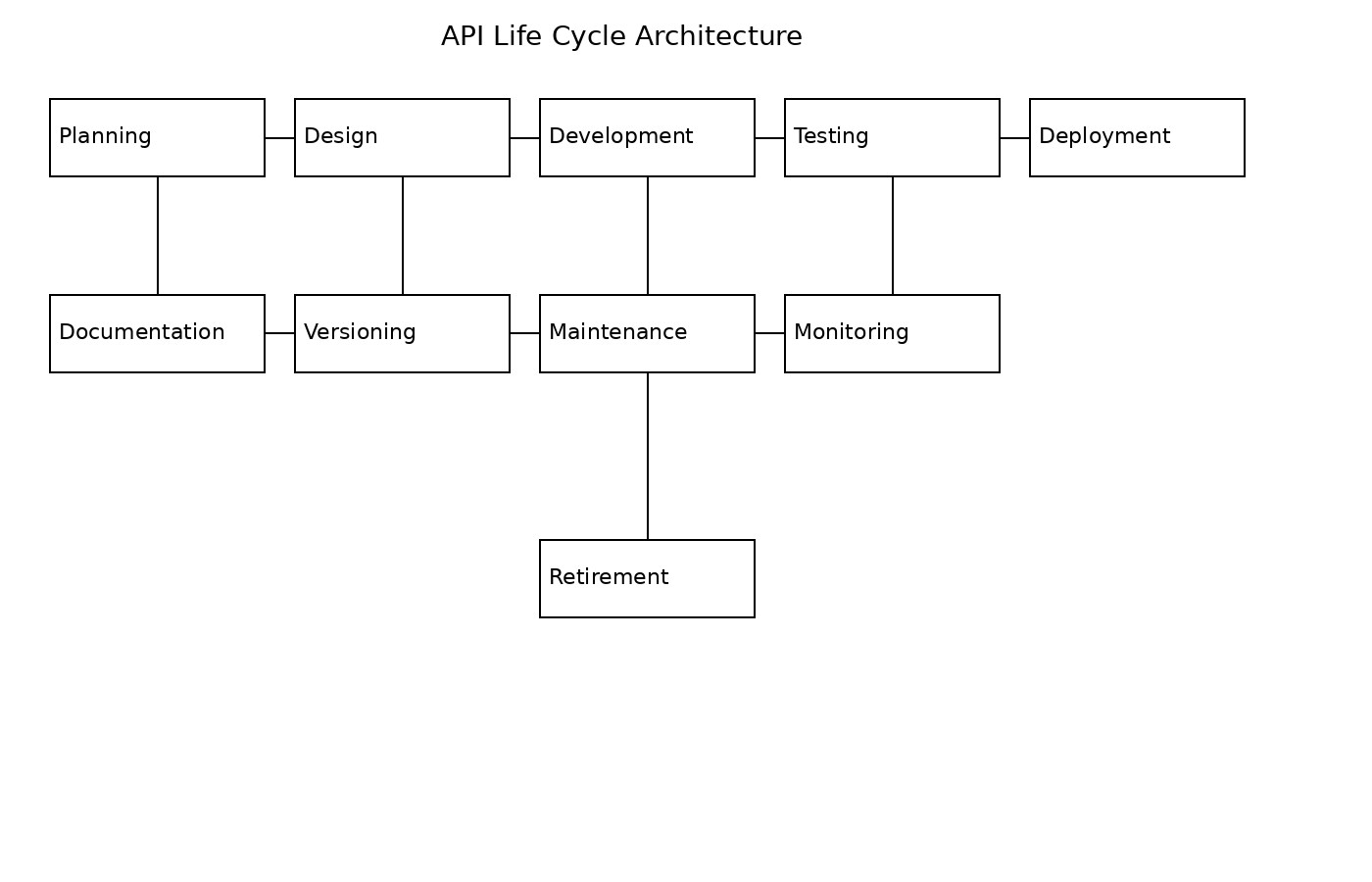
Stages of API Life Cycle
Let’s break down the API life cycle into key stages:
1. Planning & Requirement Analysis
This is the foundation stage where you define:
- Purpose of the API
- Target users (internal/external)
- Business requirements
- Data sources
Key Questions:
- What problem will this API solve?
- Who will use it?
- What data will it expose?
2. API Design
In this phase, you design how the API will look and behave.
Includes:
- Endpoint structure (
/users,/orders) - HTTP methods (GET, POST, PUT, DELETE)
- Request/Response format (JSON/XML)
- Authentication (JWT, OAuth)
Tools commonly used:
- Swagger
- Postman
Best Practice:
Design-first approach (define API before coding)
3. Development
Now you start coding the API using your preferred technology.
Examples:
- ASP.NET Web API
- Node.js (Express)
- Java Spring Boot
Focus Areas:
- Business logic
- Data handling
- Error handling
4. Testing
Testing ensures your API works correctly and securely.
Types of Testing:
- Unit Testing
- Integration Testing
- Performance Testing
- Security Testing
Popular Tool:
- Postman
5. Deployment
After testing, the API is deployed to a production server.
Common Platforms:
- Cloud (AWS, Azure, GCP)
- On-premise servers
Key Considerations:
- Scalability
- Load balancing
- Monitoring
6. Documentation
Good documentation is critical for API adoption.
Includes:
- Endpoint details
- Request/Response examples
- Authentication guide
- Error codes
Tool Example:
- Swagger
7. Versioning & Maintenance
APIs evolve over time. Versioning ensures backward compatibility.
Example:
/api/v1/users/api/v2/users
Maintenance Tasks:
- Bug fixes
- Performance improvements
- Feature updates
8. Monitoring & Analytics
Track how your API is performing.
Monitor:
- Response time
- Error rates
- Usage patterns
- This helps improve reliability and performance.
9. Retirement (Deprecation)
Eventually, APIs become outdated.
Steps:
- Notify users
- Provide migration path
- Gradually disable
API Life Cycle Diagram (Conceptual)
Planning → Design → Development → Testing → Deployment
      ↓                                      ↑
 Documentation ← Monitoring ← Maintenance ← Versioning
                          ↓
                      Retirement
Best Practices
- Follow RESTful standards
- Use proper authentication & authorization
- Keep APIs consistent
- Write clear documentation
- Implement rate limiting and caching
- Always version your APIs
Real-World Example
When you build a login API:
- Plan → Define login requirements
- Design →
/api/loginendpoint - Develop → Write authentication logic
- Test → Validate credentials & responses
- Deploy → Host on server
- Maintain → Add features like OTP, social login
Conclusion
The API Life Cycle is not just about development—it’s about managing APIs efficiently from start to end.
A well-managed API life cycle leads to:
- Better developer experience
- Higher performance
- Improved security
- Easier scalability
