In modern software engineering, writing reliable and maintainable code is just as important as delivering features quickly. One powerful practice that helps achieve both is Test-Driven Development (TDD). Popularized by methodologies like Extreme Programming (XP), TDD has become a cornerstone of high-quality software development.
What is TDD?
Test-Driven Development (TDD) is a development approach where you write tests before writing the actual code. Instead of coding first and testing later, TDD flips the process.
Core Idea:
Write a failing test → Write code to pass the test → Refactor the code
This cycle ensures that your code is always backed by test coverage.
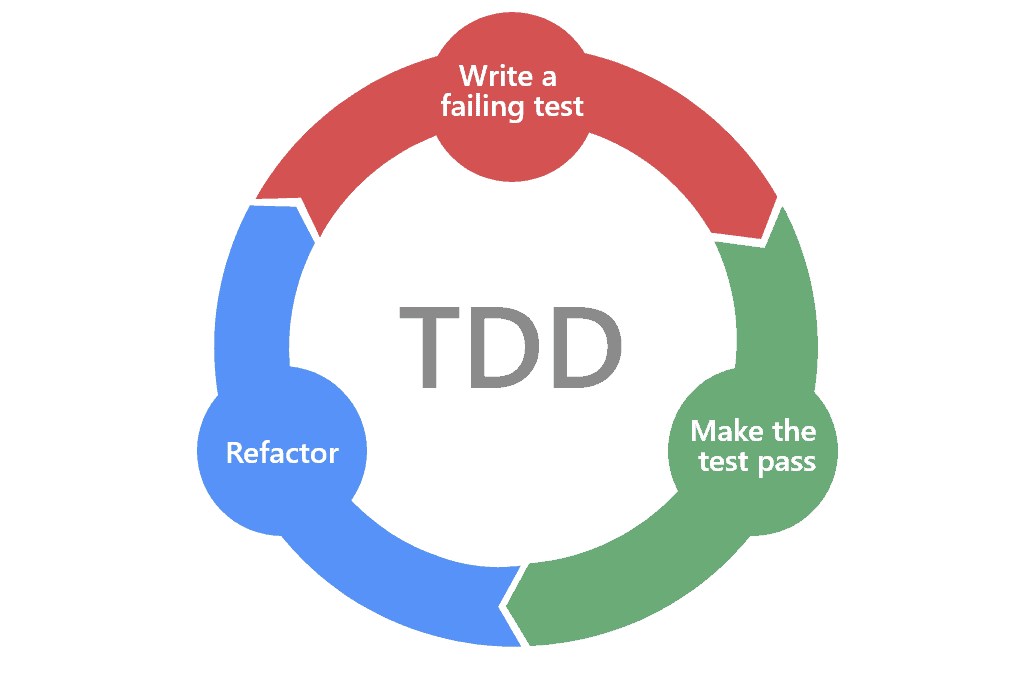
TDD Cycle (Red → Green → Refactor)
1. Red (Write a Failing Test)
- Write a test for a new feature
- Run it → it should fail (since code doesn’t exist yet)
2. Green (Make It Pass)
- Write the minimum code required to pass the test
- Don’t over-engineer at this stage
3. Refactor (Improve Code)
- Clean up code without breaking functionality
- Improve readability, performance, and structure
Example (C# TDD)
Step 1: Write Test
[TestMethod]
public void Add_ShouldReturnSum()
{
    var calculator = new Calculator();
    var result = calculator.Add(2, 3);
    Assert.AreEqual(5, result);
}
Step 2: Write Code
public class Calculator
{
    public int Add(int a, int b)
    {
        return a + b;
    }
}
Step 3: Refactor
- Optimize logic (if needed)
- Improve naming or structure
Benefits of TDD
- Better Code Quality
- Tests ensure your code works as expected from the beginning.
- Fewer Bugs
- Early testing catches issues before they grow.
- Improved Design
- Writing tests first forces you to think about structure and usability.
- Refactoring Confidence
- You can safely improve code without breaking functionality.
- Documentation Through Tests
- Tests act as living documentation of how the system behaves.
Challenges of TDD
- Initial Learning Curve
- Developers need time to adapt to writing tests first.
- Slower Start
- Development may feel slower initially.
- Requires Discipline
- Skipping tests breaks the TDD cycle.
TDD vs Traditional Testing
| Feature | TDD | Traditional Testing |
|---|---|---|
| Approach | Test first | Code first |
| Bug Detection | Early | Later |
| Code Quality | High | Moderate |
| Development Style | Iterative | Linear |
When to Use TDD
- Building scalable applications
- Writing critical business logic
- Working in Agile environments
- Developing APIs and backend systems
Best Practices
- Write small, focused tests
- Test one thing at a time
- Avoid complex test logic
- Use meaningful test names
- Keep tests fast and independent
Tools for TDD in .NET
- MSTest
- NUnit
- xUnit
- Mocking frameworks like Moq
Conclusion
Test-Driven Development is more than just a testing technique—it’s a mindset that promotes clean code, better design, and reliable software. While it may require effort to adopt, the long-term benefits in terms of quality and maintainability make it worth it.
If you're working with .NET or any modern framework, integrating TDD into your workflow can significantly improve your development process and help you build robust, production-ready applications.
