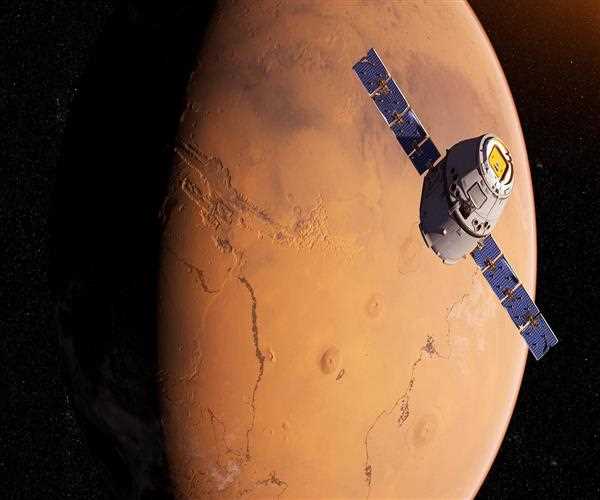
Mars Orbiter Mission (MOM) is also called “Mangalyaan”
Historical view
First, it was announced by
the then ISRO’s Chairman
G. Madhavan Nair
on
23 November 2008 but the main starting of this mission started in
2010 when the
Indian Space science started his study on the feasibility of the mission. Then on
3 August 2012, the then Prime Minister
approved the Project. And initially, it was decided to launch it on
28 October 2023 but later postponed to 5 November.
Important team members of the mission
3-
Moumita Dutta was the
project manager of this mission and her contribution is remarkable.
4-
Ritu karidhal
worked in the mission as the
Deputy Operations Director of navigations
Mission’s objective
The first and foremost objective was
to develop the technology of the interplanetary mission
here developing technology means developing the capability of this
designing,
planning, management, and operations. This effort made by the ISRO’s team made India an Interplanetary Country. Then the other important objective of this mission was
to explore the mars, their
atmosphere,
air, surface view, and many more. The scientific objective was to
study
Morphology, topology, and Mineralogy.
The payload of the spacecraft
The payload was very less as it has only 15 Kg of scientific machinery which will be considered as the scientific payload of 5 instruments those instruments are as follows.
• Lyman Alpha Photometer(LAP) – 1.97 Kg
• Methane Sensors for Mars( MSM) – 2.94 Kg
• Mars Exospheric Neutral Composition Analyser(NENCA) – 3.56 Kg
• Thermal Infrared Imaging Spectrometer(TIS)- 3.20 Kg
• Mars Colour Camera( MCC)- 1.27Kg.
Cost – the cost of this spacecraft including all pay used for this mission was
450 crore. In this mission all the working scientists were the lesser paid employee, it was mentioned by the
BBC news in his report.