0

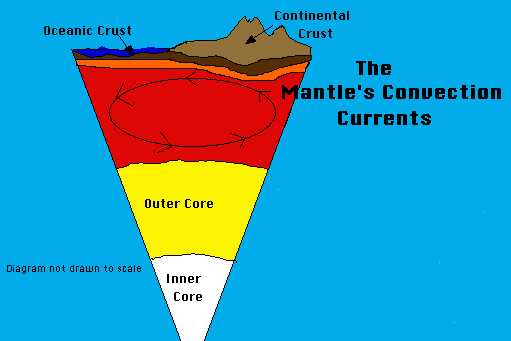
An earthquake is caused by a sudden slip on a fault. Stresses in the earth's outer layer push the sides of the fault together. Stress builds up and the rocks slips suddenly, releasing energy in waves that travel through the earth's crust and cause the shaking that we feel during an earthquake. Generally, during an earthquake you first will feel a swaying or small jerking motion, then a slight pause, followed by a more intense rolling or jerking motion. The duration of the shaking you feel depends on the earthquake's magnitude, your distance from the epicenter, and the geology of the ground under your feet. Shaking at a site with soft sediments, for example, can last 3 times as long as shaking at a stable bedrock site such as one composed of granite. If the site is in a building, then the height of the building and type of material it is constructed from are also factors.
For minor earthquakes, ground shaking usually lasts only a few seconds. Strong shaking from a major earthquake usually lasts less than one minute. For example, shaking in the 1989 magnitude 7.1 Loma Prieta (San Francisco) earthquake lasted 15 seconds; for the 1906 magnitude 8.3 San Francisco earthquake it lasted about 40 seconds. Shaking for the 1964 magnitude 9.2 Alaska earthquakes, however, lasted three minutes.