0

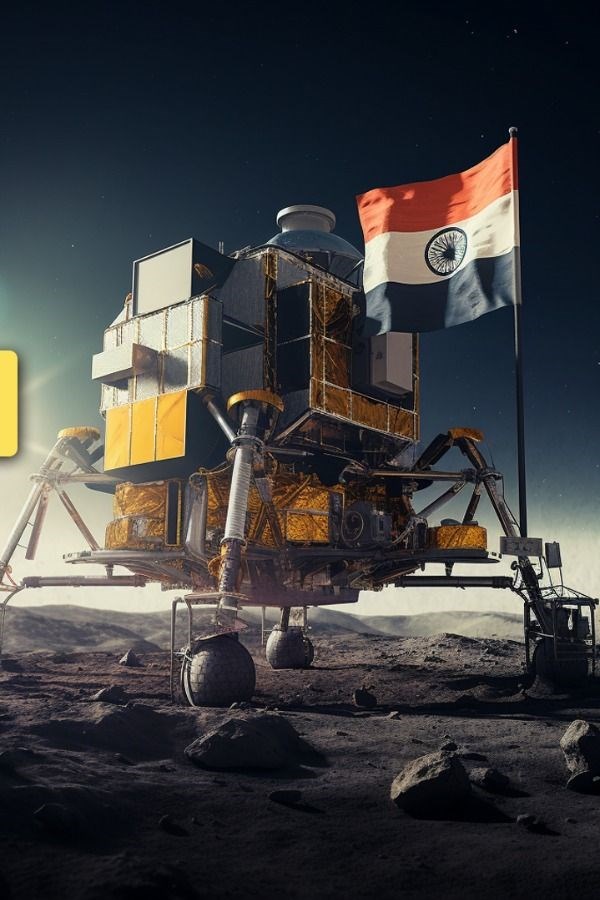
Chandrayaan-3 did not single-handedly change the global space race, but it gave India a much stronger place in it. On August 23, 2023, India became the fourth country to achieve a soft landing on the Moon, and the first to land near the lunar south polar region. That success made India’s capabilities hard to overlook.
The mission’s influence is clearest in three areas:
There is also an important limit to the claim. Chandrayaan-3 did not end the lead held by larger space programs, nor did it turn lunar exploration into a simple contest between nations. Its practical scientific findings were modest compared with the mission’s symbolic impact. But it demonstrated that India can carry out a difficult landing, strengthened its reputation as a spacefaring power, and made future international lunar partnerships more plausible.
So its main effect was not to redraw the race overnight. It widened the field and gave other countries another serious player to consider.

Chandrayaan-3 mission by India has emerged as one of the major changes in the space race because it brings a new age for lunar missions. ISRO made its first soft landing and still a lunar one, only near the south pole of the Moon that proved India’s technological prowess and low- cost model. This achievement has altered the global perceptions, and the emerging space nations have come up while calling on the so-called established space powers such as the United States, China, and Russia to sharpen their strategies.
The mission has contributed greatly to the competition in lunar exploration especially in mineral exploitation as well as in habitation. After water ice has been found at the south pole, lunar mining through Chandrayaan-3 has evoked great interest. Nowadays the attraction marks the Moon’s strategic significance to help expand investment in technology to establish a position on the future space economies.
India’s method is different from costly space missions of other nations. ISRO proved that it has even more innovation when it successfully made a soft landing that would have only been possible by NASA's or SpaceX’s hefty budget. This has led several global space agencies to reconsider the traditional mission planning, that is trying to work out plans that are both efficient and cheap while still retaining the scientific credibility and-or reliability.
The fact that Chandrayaan-3 benefits multiple nations highlights the satellite’s influence does not simply lie in its geopolitical advantages. Partnerships with the countries that have no independent space programs are also fostered due to India’s new status of a space power. This creates a testament of a multipolar world scenario within space that allows the proliferation of small nations to venture into missions in lunar exploration.
Finally, India’s lunar mission reimagines space exploration and competition, rendering them cheaper and more achievable. As many more nations regained the space exploration bug, new ideas are being developed at a faster rate. Chandrayaan-3 has become a new evidence of the fact that space exploration is not a luxury of few super powers only; instead, it has set on a new revolution and is lifting up the scale of aspirations of every country in this sphere.
Conclusion
Chandrayaan-3 has come and shifted the traditional paradigm of space exploration that expensive monetary investment is needed to dominate the space race. Subsequently, it aids in the advancement of lunar studies, increases the space rivalry between countries, and enhances space cooperation. Thus, the entry of a country like India can be considered as a positive development as it opens the future of space exploration for more competition as the world cannot be dominated by a small group of countries.
