0

Russia’s full-scale invasion of Ukraine in 2022 reshaped NATO’s priorities. It did not make Ukraine a NATO member, and NATO countries have not formally entered the war as combatants. But the conflict has changed the alliance’s size, military posture and view of security in Europe.
Finland and Sweden joined NATO after decades of military non-alignment: Finland in 2023 and Sweden in 2024. Their accession brought capable armed forces into the alliance and altered security planning around the Baltic Sea and the Nordic region. It also meant that Russia now borders NATO across a much longer stretch of northern Europe.
Ukraine, by contrast, remains outside the alliance. NATO members have provided weapons, training and other assistance, while maintaining that membership requires agreement among allies. The war has made the alliance’s “open door” policy more consequential, but it has not removed the political and security questions surrounding Ukraine’s future accession.
NATO has reinforced its eastern flank with more troops, exercises and plans for faster reinforcement. Governments have also placed greater emphasis on ammunition stocks, air defence, logistics and defence spending. These changes respond to the demonstrated possibility of a large conventional war in Europe, rather than to a sudden change in NATO’s core purpose: collective defence.
The shift has costs and complications. Rebuilding military capacity takes years, and allies differ over how much to spend and how to share the burden. More forces and military activity near Russia can strengthen deterrence, but they also leave less room for miscalculation if communication breaks down.
The war has raised the risk of direct NATO-Russia confrontation, including nuclear escalation, even though both sides have reasons to avoid it. It has also weakened an already strained arms-control environment and pushed European governments to reassess energy dependence and the security of critical infrastructure.
For countries outside Europe, the conflict has become a test of how strongly states will defend territorial sovereignty and how sanctions, military aid and economic ties are used in a major war. It has also drawn attention to the links between European security and wider strategic competition, including Russia’s relationship with China. Those effects are significant, but they do not mean NATO has become a global alliance in the same sense as a worldwide military coalition.
Overall, the war has made NATO larger and more focused on deterring Russia, while making European security more militarized and less predictable. Whether that produces lasting stability depends on credible defence, allied unity and ways to reduce the chance that deterrence turns into escalation.

Global security and NATO’s policy of expansion have been reconfigured by the Russia Ukraine war. This led Sweden and Finland to ask to join NATO because of a Russian aggression which by NATO is attempting to thwart European stability. It is a wider realignment in which countries are choosing collective defence, beyond neutrality, in response to new threats.
NATO expansion also emphasizes the alliance’s growing importance to counter Russian aggression. Both a strategic shift taking Finland accessing, the potential membership of Sweden, significantly strengthens NATO’s northern defenses. But that these developments come to pass, is a signal of a stronger commitment to collective security and a stronger deterrent posture towards possible threats by adversarial states, which make the alliance stronger.
The war has raised global security fears in NATO. Alliances have been strengthened and military spending raised throughout the world. The geo-political risk and economic disruption in the conflict has made it quite evident that the energy security, cyber defence and supply chain have become a vulnerable affair in modern times, forcing the nations to make a comprehensive security strategy to reduce those falls to an optimum level.
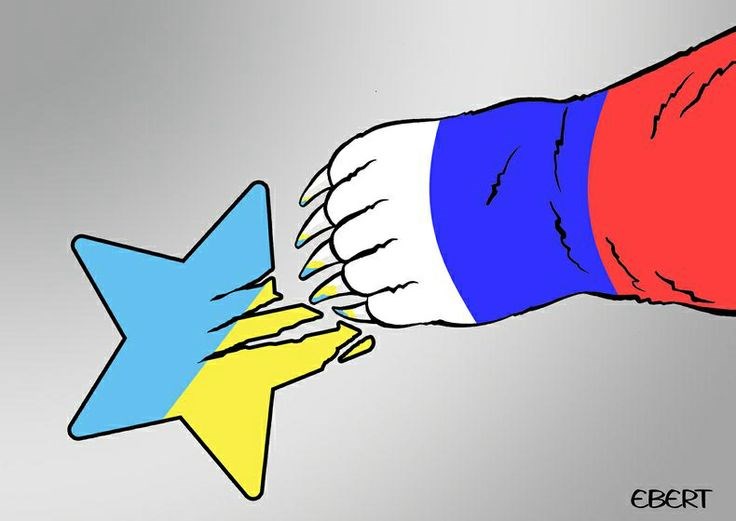
Russia has proved to be a socio-economic boost to transatlantic unity. The U.S. together with the Europeans’ allies revere increased military deployments and support for Ukraine, in support that their assevere claims — again — have made a total bind about NATO. This renewed solidarity has relayed to NATO that the alliance is resilient and that there are also solid counter narratives to the alleged internal disintegrations and as the Western security backbone.
War movies NATO towards its strategic transformation, its influence spreading and global security trend righting. The conflict, marked by an already high level of tensions and shifting alliances, has shown the necessity of collective defense and reinforced the central role of NATO in ensuring political stability in a more volatile world.
Conclusion
In Conclusion, the Russia Ukraine war has implications for NATO and the international security system. It has grown stronger, its membership has grown bigger and its unity with its transatlantic partners has grown. With a growing geopolitical tension, NATO’s participation is necessary to maintain equilibrium and prevent aggression on the ground since collective security is the crucial element of a world that knows no limit.
