0

China’s slowdown is influencing supply chain recovery in two directions at once: softer demand is easing some pressures, while uncertainty around production and trade is making companies cautious about where they source and sell.
When Chinese factories and consumers buy less, demand for raw materials, components, and shipping can fall. That can take some heat out of freight rates and input costs, and it may give businesses time to rebuild inventories after earlier shortages. But weaker demand also affects suppliers that rely on Chinese customers, as well as countries exporting commodities to China.
The effect on manufacturing is less straightforward. China remains a major source of components and finished goods, so its factories are still central to many supply chains. Slower domestic sales can leave producers with spare capacity and encourage them to sell more abroad. That can help overseas buyers find goods, but it may put pressure on manufacturers in other countries and prompt new trade barriers.
Meanwhile, companies are still weighing risks such as geopolitical tensions, changing tariffs, and the possibility of future disruptions. Many are adding suppliers in other countries or holding more inventory, but shifting production takes time and can raise costs. For most firms, the practical response is diversification rather than a complete move away from China.
So the slowdown is not simply speeding up or reversing recovery. It is changing the mix of risks: some shortages and cost pressures may ease, while dependence on one market, uncertain demand, and trade friction remain concerns.

China’s economic contraction hammers global supply chain, production, exports, and supply chains. For more than two years now, weakening domestic demand, depreciation in exports and a cut in foreign investments are some factors prolonging global volatility. Much like many other industries globally, problems in China – the world’s factory – such as bottlenecks, delays, and increasing costs stifle industries such as consumer electronics and automotive making the process of recovery uncertain and challenging.
One of those major concerns is the low production capacity that subsequently distributes fewer products across the globe. Businesses source their products from China and or get their components from this country, which is now experiencing factory slow-downs and energy rationing. This leads to a situation where shipment of the products is delayed, costs increase and inventory becomes so unpredictable. They are under pressure to seek other product’s, which is very bad for them as it is a tiring and expensive process.
Chinese deceleration also affects the international supply chains and transport. Global Shipping faces inefficiencies and weaker exports and fluctuating demand in major ports. Contraction in manufacturing results in lesser shipment frequency that has ripple effects through the influence it has on the prices of shipping as well as availability of containers. It affected the supply chain since logistics firms require changing their capacity. They are factors that put supply chain restoration in a very complicated endeavor, and they elongate the time taken before the world’s economy can move out of deep waters.
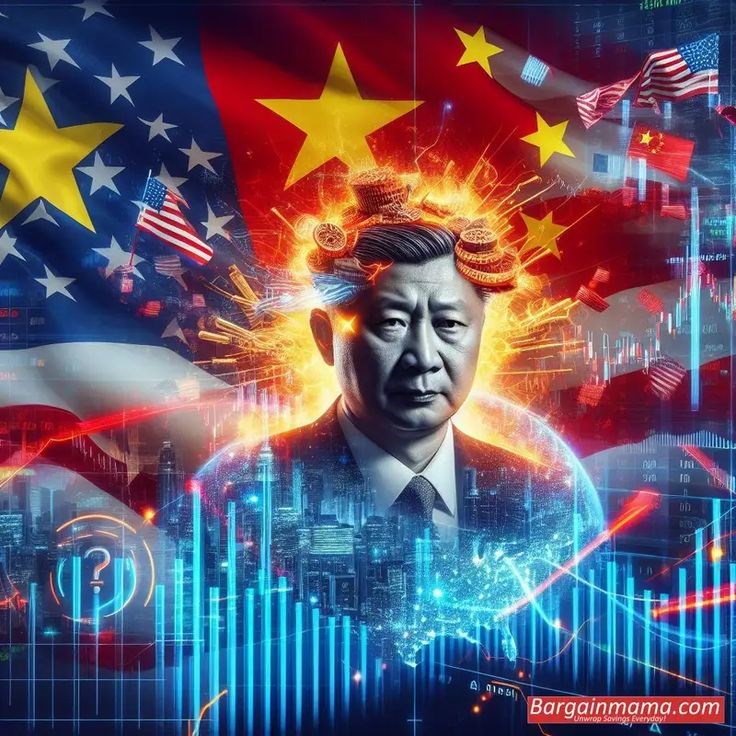
Foreign investments in China are also coming down due to various issues such as economic downturns, regulatory concerns, and tensions between China and other countries. This is because the Taiwanese and Chinese authorities continue to provoke each other and there are hints of war. Several firms are diversifying the production to Southeast Asia or India in hope of creating a more stable environment. However, all these involve costs of making changes in the supply chain like building new supply networks, forging new suppliers and carving out new regulation all of which hinder the immediacy of recovery.
Thus, businesses are shifting to regional diversification and digital solutions for supply chains. A current trend that has been attributed to the current technological advancement is outsourcing through automation, near shore sourcing, and technology acquisition. However China’s prospects are slowing down, and while this hinders the development of the supply chain, it also speeds it up. Thus, it can be argued that long-term strategies related to resilience and diversification will define the external image of world trade and supply chain recovery.
Conclusion
China’s economy, as the world’s second-largest economy, poses a threat to the global supply chain bounce-back as manufacturing, trade, and logistics remain affected. Thus, business diversification and application of information technology push the process of recovery though to this date it is still gradual and expensive. Long-term resilience is contingent upon diversification and diversification of supply chains from China, digitalization, and bean technology to ensure the optimization of future volatilities of the global trade.
