0

Nature-based flood management works by giving rainwater more places to soak in, slow down, or spread out safely before it overwhelms drains and rivers. Rather than relying only on larger pipes and concrete channels, cities are adding green features across streets, buildings, and public spaces—and often combining them with conventional drainage.
On a street, rain gardens and bioswales collect runoff from roads and sidewalks, filter it through soil and plants, and let some of it seep into the ground. Permeable pavement in streets, parking areas, and plazas allows water to drain through the surface instead of rushing toward storm drains. At building scale, green roofs and tree canopy hold rain temporarily, reduce runoff, and can also cool overheated neighborhoods.
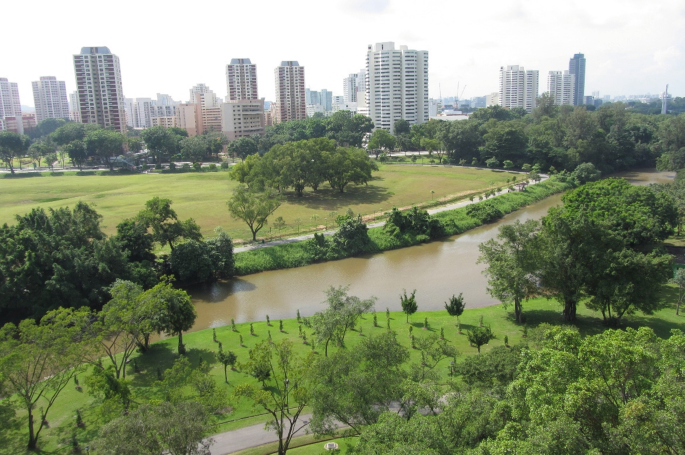
Larger public spaces can do double duty. Parks, restored streams, and wetlands may be designed as floodable parks and wetlands: useful for recreation in ordinary conditions, but able to store or convey extra water during heavy rain. In some places, buried or channelized streams are reopened so they can provide more room for water and habitat.
These measures are most effective as a connected system. A rain garden may capture water from one block, while a park or wetland downstream provides storage when the storm is larger. Cities also pair these features with drains, pumps, barriers, and other engineered works. This hybrid green-gray infrastructure approach can manage frequent rainfall while retaining engineered capacity for events that exceed what landscapes can safely absorb.
Planning matters as much as installation. Designers need to account for local soils, groundwater, slopes, pollution in runoff, and the size of storms the system is meant to handle. Planting beds and permeable surfaces need maintenance too; clogged inlets or compacted soil can reduce their performance. Nature-based projects can lower flood risk and improve public space, but they are not a substitute for emergency planning or protection from every extreme flood.

Nature-based arrangements are progressively being incorporated into urban infrastructure to flood management, utilizing normal cycles to improve flexibility and maintainability.
Green Rooftops:
Penetrable Asphalts:
Metropolitan Wetlands and Maintenance Lakes:
Downpour Nurseries:
Reestablished Waterways and Floodplains:
Tree Planting and Metropolitan Woodlands:
Living Coastlines:
Strategy and Arranging Incorporation:
Financial and Social Advantages:
In outline, nature-based answers for flood management are being coordinated into metropolitan framework by consolidating green rooftops, porous asphalts, metropolitan wetlands, downpour gardens, reestablished waterways, tree planting, bioswales, living coastlines, strong approaches, and local area association. These methodologies alleviate flooding as well as upgrade metropolitan strength, biodiversity, and personal satisfaction.