0

Drones and satellites give farmers and land managers a way to see how conditions vary across a field or property, rather than treating every acre as if it were the same. Their images can reveal patterns that are difficult to spot from the ground, then help direct inspections and management decisions.
Drones fly relatively close to the ground, so they can capture detailed images on demand. RGB cameras help identify visible issues such as gaps in planting, storm damage, or weed patches. Multispectral and thermal sensors can show changes in plant vigor or heat that may point to crop stress, irrigation problems, or disease. A drone survey can be useful when a grower needs a close look at a particular field soon after a problem appears.
Satellites cover much larger areas and collect imagery repeatedly over time. That makes them useful for tracking seasonal changes, comparing fields, monitoring vegetation across a region, and observing remote or extensive land. Some satellite data is freely available, although clouds, image resolution, and how often a satellite passes over an area can affect whether it is suitable for a specific task.
Images are often processed into maps or indicators rather than used as photographs alone. These can help identify:
For land management, the same tools can help monitor pasture condition, erosion, wetlands, forest health, and land-use change. Aerial data can also document conditions before and after restoration or conservation work.
Imagery is best treated as a guide, not a diagnosis. A vegetation index may flag an unusual area, but it does not by itself explain whether the cause is disease, water stress, soil differences, or something else. Pairing images with field observations, soil data, weather records, and equipment information makes the findings more reliable. The practical choice depends on the job: satellites are often a good fit for broad, repeated monitoring, while drones are useful when finer detail or a timely look at a smaller area is needed.

Drones and satellite symbolism are changing accuracy farming and land the board rehearses by giving point by point, continuous information that upgrades effectiveness, manageability, and yield streamlining.
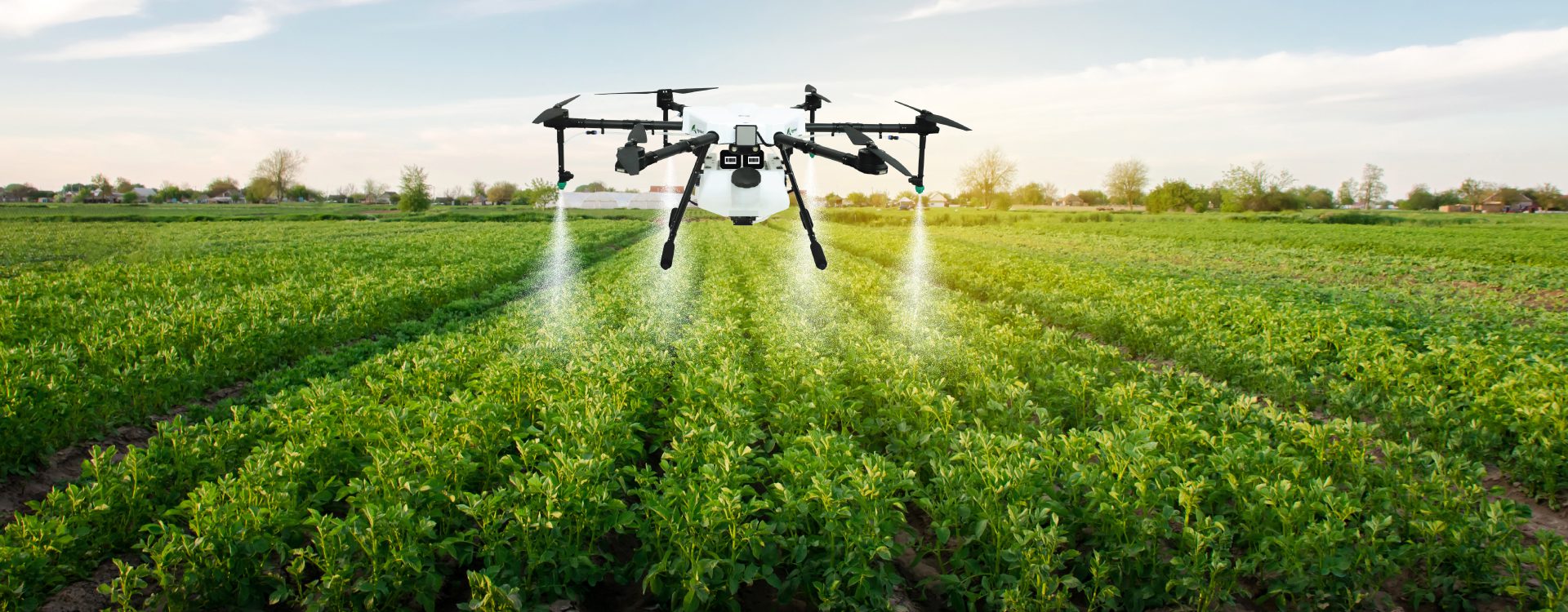
Crop Observing and The Board:
Elevated Observation: Drones furnished with cameras and sensors catch high-goal pictures of yields, permitting ranchers to screen crop wellbeing, identify illnesses, and survey supplement inadequacies.
Satellite Symbolism: Satellites give wide scale checking abilities, offering successive updates on crop development, vegetation files, and land conditions across enormous regions.
Accuracy Use of Sources of Information:
Variable Rate Application: Drones and satellite information empower exact utilization of manures, pesticides, and water in light of harvest needs distinguished through information examination.
Cost Proficiency: Ranchers can decrease input costs and limit ecological effect by applying inputs just where and when required, in view of spatial fluctuation recognized by robots and satellites.
Yield Forecast and Streamlining:
Information Examination: AI calculations dissect robot and satellite symbolism to anticipate crop yields, distinguish ideal establishing times, and gauge gather times all the more precisely.
Choice Emotionally supportive networks: Ranchers can settle on informed choices with respect to establishing densities, water system timetables, and reaping methodologies in view of prescient models got from information examination.
Soil and Field Planning:
Geographical Planning: Drones outfitted with LIDAR or photogrammetry abilities make high-goal 3D guides of fields, recognizing soil varieties and seepage designs.
Land Use Arranging: Satellite symbolism helps with land use arranging by evaluating soil ripeness, disintegration dangers, and appropriateness for various harvests or land the executives rehearse.
Ecological Observation and Preservation:
Disintegration Control: Drones and satellites screen soil disintegration examples and vegetation cover, working with disintegration control measures and land protection endeavors.
Water The Board: Remote detecting information improves water use by checking soil dampness levels and anticipating water system needs, advancing proficient water the executives rehearses.
Catastrophe Reaction and Flexibility:
Early Recognition: Drones and satellites empower early identification of irritation pervasions, infections, or climate-related crop harm, taking into account convenient intercession and alleviation endeavors.
Post-Catastrophe Appraisal: After cataclysmic events, drones and satellites give fast harm evaluation and work with recuperation arranging by surveying the degree of yield misfortune and framework harm.
All in all, drones and satellite symbolism assume significant parts in present-day horticulture and land the executives by giving noteworthy information that upgrades direction, further develops asset proficiency, and advances economical practices. Their reconciliation permits ranchers and land chiefs to accomplish higher efficiency, decrease natural effects, and adjust to changing farming circumstances all the more successfully.
Read more: How are conservation drones being used to monitor and protect endangered species