0

Light pollution is excessive or poorly directed artificial light at night. It includes bright outdoor lighting, glare, and the glow that brightens the night sky. Its effects reach beyond astronomy: many living things use darkness and natural day–night cycles as cues for when to feed, move, rest, or reproduce.
For nocturnal animals, artificial light can change nocturnal animal behavior by disrupting feeding, hiding, and breeding patterns. Insects may circle lamps until they are exhausted or become easy prey, reducing the insects available to other animals and potentially affecting insect pollination after dark.
Light can also interfere with animal movement. Bright coastlines may disorient newly hatched sea turtles, while illuminated buildings and other structures can confuse migratory birds and sea turtles or increase collision risks for birds. Plants, too, can respond to prolonged light by shifting the timing of leaf growth, flowering, or dormancy. The effects vary by species, season, and the brightness, color, and direction of the light.
Our bodies use changes in light and darkness to regulate circadian rhythms, the internal timing system that helps control sleep and other daily processes. Bright light at night—particularly light reaching the eyes late in the evening—can delay sleep timing and affect melatonin release. Exposure around bedtime may therefore make it harder for some people to fall asleep or maintain a regular sleep schedule.
Research has also reported links between nighttime light exposure and some health conditions, but those findings do not prove that light pollution alone causes them. Individual exposure, work schedules, health, and other environmental factors can all matter.
Reducing unnecessary outdoor lighting can help: aim fixtures downward, use only the brightness needed, and turn lights off or use motion sensors when practical. Shielded, warm-colored lighting can limit glare and reduce the amount of short-wavelength light spilling into the night.

Light pollution, the extreme or misled engineered gentle created via human exercises, has colossal effects on ecosystems and human health:
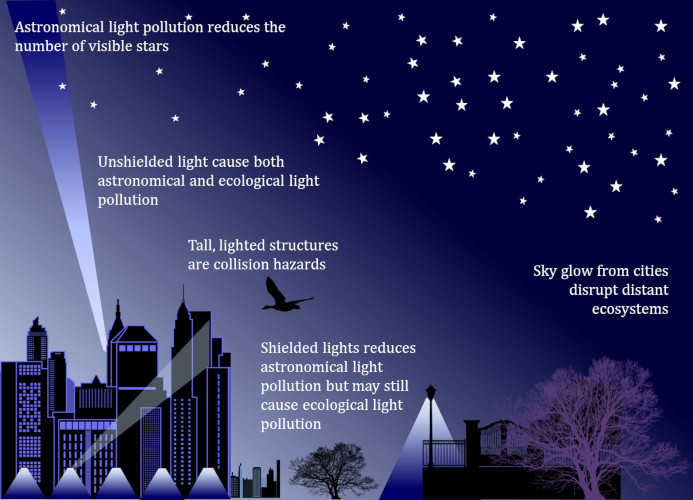
Biological system disturbance: Light toxins upset home-grown environments with the guide of adjusting the direct, copy, and relocation examples of various species. Nighttime creatures rely on obscurity for sports alongside scavenging, looking, and routing. Fake gentle can perplex nighttime creatures, prompting diminished scavenging effectiveness, expanded weakness to hunters, and changes in people elements. Light contaminations likewise impact vegetation with the guide of disturbing their development and blossoming cycles, which can have flowing outcomes on entire biological systems.
Interruption of Circadian Rhythms: Openness to engineered light at evening times upsets the circadian rhythms of individuals and various creatures. Circadian rhythms manage various physiological strategies, which incorporate rest-wake cycles, chemical emission, and digestion. Disturbance of circadian rhythms because of gentle contamination can cause rest issues, for example, sleep deprivation and lack of sleep, that have negative effects on regular wellness and appropriately being.
Wellbeing Effects: Light contaminations have been connected to different damaging wellness results in people, which incorporate the expanded peril of weight, diabetes, cardiovascular illnesses, and certain sorts of malignant growths. Openness to fake gentle around evening time stifles the assembling of melatonin, a chemical that directs rest and goes about as a cell reinforcement. Melatonin concealment disturbs the casing's inward clock and insusceptible element, making people more in danger of constant disorders.
Galactic Effects: Light contamination darkens the evening sky and impedes cosmic perceptions and exploration. Inordinate manufactured light makes it extreme to view stars, planets, and other heavenly contraptions, limiting our data of the universe and reducing the social and scholarly charge of stargazing.
Addressing gentle contamination requires authorizing measures to diminish unnecessary open-air lighting, advance productive lighting innovations, and bring issues to light about the meaning of holding normal obscurity. By limiting gentle contamination, we can safeguard biological systems, watch human health, and hold our association with the home-grown world and the universe.
Read more: How to clean National Capital of India from pollution
