0

Governments use a mix of policies to narrow income gaps, though the balance differs by country and by what drives inequality there. Some measures change how income is distributed after people earn it; others aim to improve access to jobs and higher wages in the first place.
On the tax-and-benefit side, common tools include progressive income taxes, child benefits, unemployment support, pensions, and cash transfers for lower-income households. Some countries also use tax credits that supplement earnings from work. These policies can reduce poverty and soften income differences, but their reach depends on eligibility rules, benefit levels, and how well people can access them.
Governments may also influence wages through minimum-wage laws, collective bargaining rules, and enforcement against wage theft or discrimination. Investment in public education and healthcare, childcare, housing support, and job training can reduce costs for families and widen access to opportunity. Policies that support employment—such as affordable childcare or help with relocation—can matter too.
There is no single approach that works equally well everywhere. A country with widespread informal work may struggle to deliver benefits through standard payroll systems, while another may face limits on public spending or weak enforcement. The effects also depend on how policies are funded and whether they reach people most exposed to low pay and economic shocks.

Governments around the world are employing various procedures to address income inequality and advance financial inclusivity.
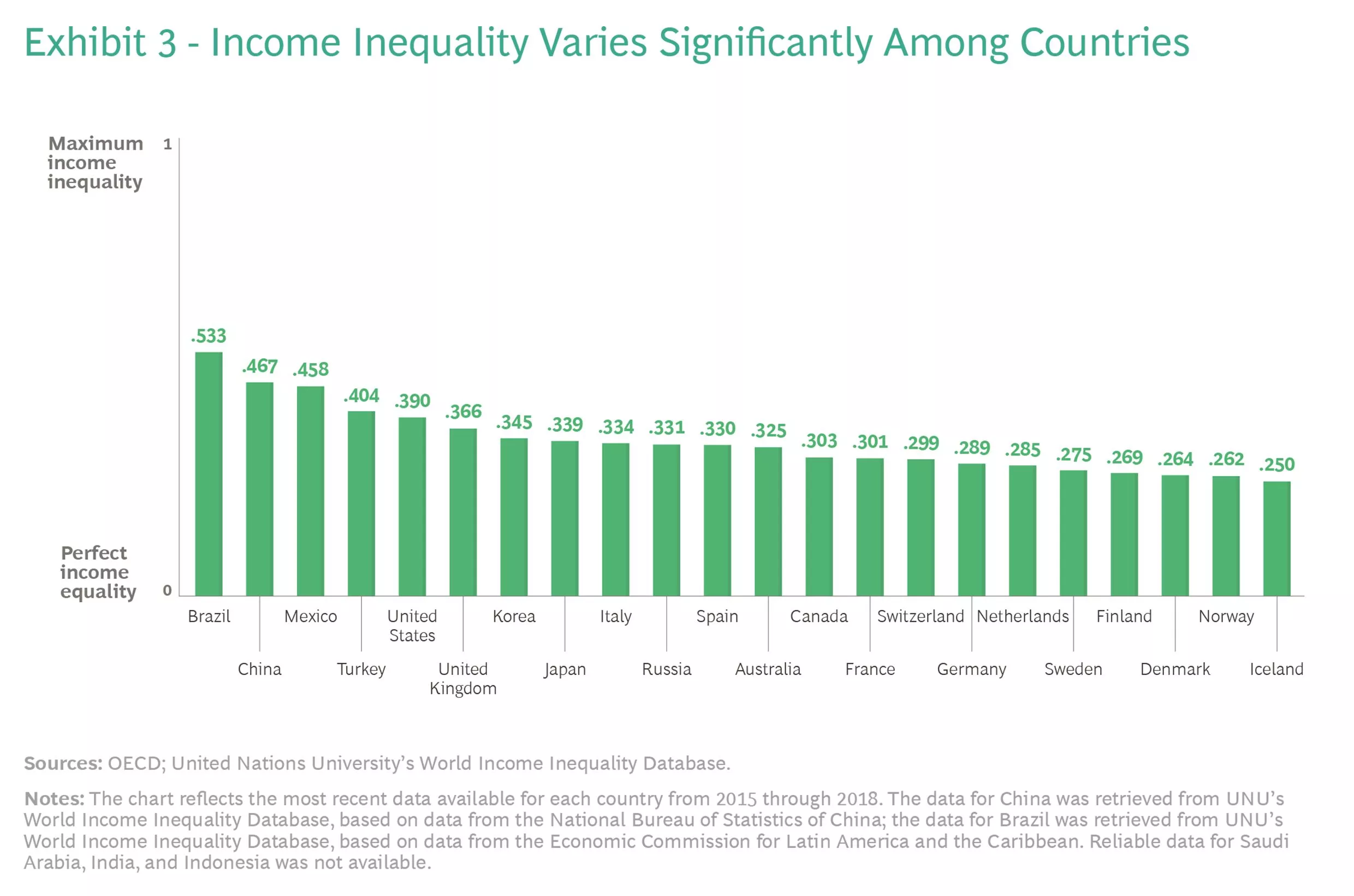
Moderate tax assessment: The government has put into impact imaginative duty structures wherein higher-profit people or organizations are charged at higher rates than decline-pay workers. Moderate tax collection targets to reallocate abundance and lessen benefits disparity by utilizing guaranteeing that people who can stand to make commitments extra accomplish this to help social government assistance bundles and public administrations.
Social government assistance applications: Government administrations give social government assistance programs comprising of joblessness benefits, food help, lodging endowments, and medical care administrations to help low-benefit individuals and families. These bundles goal to reduce neediness, upgrade living necessities, and decline profit disparity by means of offering basic help to those in care.
Least compensation lawful rules: Governments lay out insignificant pay legitimate rules to verify that individuals get a fair and bearable pay for their efforts. By setting least compensation guidelines, legislatures are looking to reduce profit abberations between low-pay workers and better-pay workers, in this way limiting the compensation hole and advancing money-related value.
Instruction and capacity advancement: Governments put cash into training and ability improvement activities to engage individuals from denied foundations and furnish them with the data and abilities needed to win inside the faculty. Admittance to fantastic preparation and professional schooling open doors can assist with spanning the distance between uncommon financial organizations and advance vertical portability.
Work market approaches: Governments authorize efforts commercial center guidelines comprising of efforts necessities, business environment assurances, and hostile to separation regulations to make specific legit treatment and indistinguishable opportunities for all individuals. These guidelines aim to forestall double-dealing, diminish pay inconsistencies, and sell fairness inside the work environment.
Comprehensive monetary strategies: Governments' administrative systems form comprehensive monetary principles that focus on impartial increment, task creation, and social portability. By forcing decisions that sell comprehensive monetary turn of events, states objectively address primary obstructions to probability and encourage a more prominent comprehensive and fair society.
While governments employ different procedures to manage pay imbalances, achieving critical advancement requires a multi-layered approach that joins designated guidelines, social speculations, and cooperative endeavors across areas. By focusing on monetary inclusivity and civil rights, states can contribute towards bringing down pay disparity and building a more fair society for all.
